

Recently, SATO Vietnam Solutions Co., Ltd., a subsidiary of the SATO Group, a global leader in automatic identification and tagging solutions, announced the successful implementation of an RFID tag printing solution for HAYABUSA (VIETNAM) CO., LTD. This collaboration not only meets the stringent requirements of international retailers for supply chain transparency but also sets a benchmark for the digital transformation of the fishing tackle manufacturing industry.
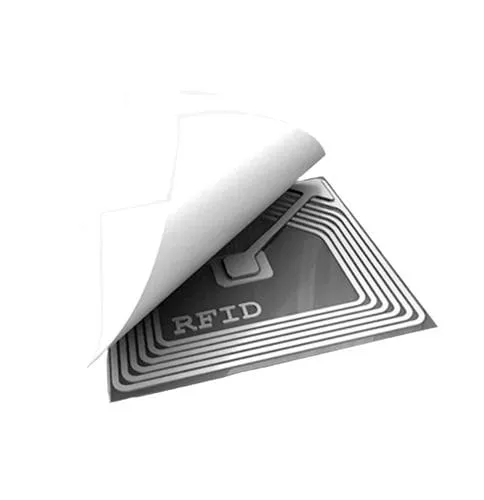
A key client requested the introduction of RFID by a fishing hook manufacturer
Hayabusa, a globally renowned manufacturer of freshwater and saltwater fishing hooks, operates in numerous countries worldwide, supplying products to many international retailers and consistently adhering to strict Japanese quality and precision standards. With the increasing demands for supply chain traceability in the global retail industry, a key client of the company raised new RFID tagging requirements. The requirement was to add unique serial numbers to products to achieve precise tracking throughout the entire process from production to sales, posing greater challenges to inventory management accuracy, error rate control, and compliance. Given the diverse product range and urgent needs, finding a reliable solution provider became Hayabusa’s top priority.
Building on years of successful collaboration in barcode labeling solutions, SATO and Hayabusa have partnered to revolutionize traditional label manufacturing processes with RFID technology. The newly launched solution boasts three core advantages: First, efficient and convenient on-site operation. Operators simply scan a barcode to initiate RFID tag printing powered by SATO printers and the Loftware Cloud platform, easily completing EPC-compliant label printing and encoding. Second, end-to-end traceability. Each label is assigned a unique serial number and securely stored in the cloud, completely eliminating label duplication. There are no minimum order quantities, enabling on-demand production. Third, dual quality assurance. SATO, in partnership with labeling partner Avery Dennison, provides RFID tags pre-audited by global retailers, ensuring the reliability of every shipment.
“SATO provides us with more than just a product; it offers a complete solution,” said Li Changminzhi, Production Manager at Hayabusa. “Their on-site training ensured the team mastered the system’s operation, allowing us to accurately control label usage and completely eliminate concerns about compliance and cost.” Tran Chanh Trung, Sales Manager for Apparel Products at SATO Vietnam Solutions, emphasized, “As RFID tags become the new standard in global retail, SATO will continue to help manufacturers meet diverse needs and promote the widespread application of RFID technology, from label printing to automated goods verification.”
In the wave of global supply chain digitalization, RFID technology is becoming a key link connecting production and sales. The collaboration between SATO and Hayabusa provides a valuable transformation path for the fishing tackle industry and many other manufacturing sectors — transforming compliance requirements into operational advantages through technological innovation and deep cooperation, improving supply chain transparency while enabling companies to gain broader global market opportunities.
Why are more and more retailers requiring suppliers to adopt RFID?
Globally renowned retailers such as Walmart, Zara, H&M, Dick’s Sporting Goods, Nordstrom, and Uniqlo have all explicitly required their suppliers to adopt RFID technology. Walmart, in particular, has taken the lead by extending this requirement to multiple categories, including home furnishings, toys, electronics, and furniture, becoming a benchmark for RFID application in the industry. These retailers cover multiple sectors, including apparel, sporting goods, and general retail, and their requirements have gradually expanded from apparel and footwear to all categories, including home furnishings, electronics, and beauty products, driving RFID technology to become a standard feature of the retail supply chain. The core reason why more and more retailers are requiring suppliers to adopt RFID is that this technology can achieve cost reduction, efficiency improvement, and digital upgrades in retail operations from multiple dimensions, including inventory management, supply chain efficiency, cost control, and consumer experience. It is a key means to cope with industry competition.
RFID technology has allowed the retail industry to break free from the inefficient traditional manual inventory and barcode management model, realizing intelligent and real-time merchandise management. In inventory management, RFID readers can quickly read product information in batches. For example, an employee using a handheld RFID reader to scan a shelf can obtain real-time data for 800 items in just 5 seconds, increasing efficiency by 40 times compared to traditional barcode scanning. It can also automatically warn of abnormal inventory, reducing the turnover time of popular items by 68% and improving inventory accuracy from the traditional 63% to 99.8%. This not only solves the problems of time-consuming and error-prone manual inventory checks but also allows for precise control of inventory levels, preventing stockouts or overstocking. Especially for categories like clothing, electronics, and toys, this precise inventory management directly improves the sales rate at full price.
From a supply chain perspective, RFID technology enables transparent tracking of goods from suppliers to retail terminals. After suppliers attach RFID tags to goods, retailers can monitor the transportation status and warehousing status of goods in real time. They can even automatically trigger replenishment orders through the system, shortening the traditional 72-hour replenishment cycle to 6 hours. For example, at Walmart, when the inventory of plush toys with RFID tags falls below a certain threshold, the system automatically places an order with the distribution center. Combined with AI algorithms, it can also predict 7-day sales fluctuations and pre-allocate inventory from warehouses within a 300-kilometer radius. This efficient supply chain responsiveness allows retailers to quickly respond to changes in market demand while reducing warehousing labor costs.
Cost control is also a key reason why retailers are pushing suppliers to adopt RFID. RFID access control systems effectively prevent merchandise theft, resulting in a 25% reduction in Walmart’s quarterly loss rate per store, saving over a million dollars annually, and reducing the overall loss rate from 1.5% to 0.3%. Furthermore, RFID technology reduces the error rate of manual operations; the error rate for product identification verification in the logistics process has decreased from 1.2% to 0.05%, avoiding economic losses due to incorrect or missing goods. As the industry scales up its application, the cost of RFID tags will also decrease, significantly lowering the investment threshold for suppliers.
From a consumer experience perspective, RFID technology can provide customers with more convenient shopping services. Products tagged with flexible RFID tags allow smart mirrors to simultaneously display inventory sizes and styling suggestions, increasing virtual try-on conversion rates by 27% and reducing return rates by 19%. RFID smart checkouts enable “drop-and-go” functionality, identifying 10 items simultaneously in just 0.3 seconds, 12 times faster than traditional barcode scanning. This enhanced experience strengthens customer willingness to buy and loyalty, helping retailers gain an edge in e-commerce competition. Simultaneously, retailers can analyze customer behavior using RFID-collected consumer data for targeted marketing, further improving operational efficiency.
Furthermore, the demonstration effect of retail giants has driven this trend. Walmart was the first to mandate the use of RFID tags by suppliers in categories such as apparel and footwear, subsequently expanding the scope to multiple categories. Decathlon, Dix Sports, and other companies followed suit, establishing an industry standard. Suppliers who do not comply will find it difficult to enter the supply chain systems of large retailers, prompting more suppliers to proactively adopt RFID technology.