
ShinWon Fashion Group is a leading publicly listed fashion company in South Korea, which started as a small sweater company in Seoul in 1973. Headquartered in Mapo-gu, Seoul, it has production bases and sales offices in multiple countries including Guatemala, Vietnam, and India, employing over 25,000 people worldwide. It has built a vertically integrated production system covering spinning, knitting, dyeing, and warehousing. The group owns several men’s and women’s wear brands, including Besti Belli and Sieg, providing unique fashion experiences to consumers in South Korea and China. It also undertakes OEM/ODM business for knitwear and sweaters, exporting its products to over 40 countries including Europe, America, and Japan, and has supplied internationally renowned brands such as Patagonia. It actively promotes digital transformation, building smart factories and 3D virtual studios to optimize production and design processes, while making ESG a core strategy. In 2024, it won the Walmart Fashion Excellence Award, making it a fashion giant leading the development of the South Korean fashion industry and gaining international recognition.
ShinWon recently announced the global rollout of its self-developed RFID tunneling system. This strategic move not only aims to eradicate packaging errors and achieve full transparency across the international supply chain, but also marks a crucial stage in the company’s digital transformation, further solidifying its leading position in the technology-driven knitwear manufacturing sector.
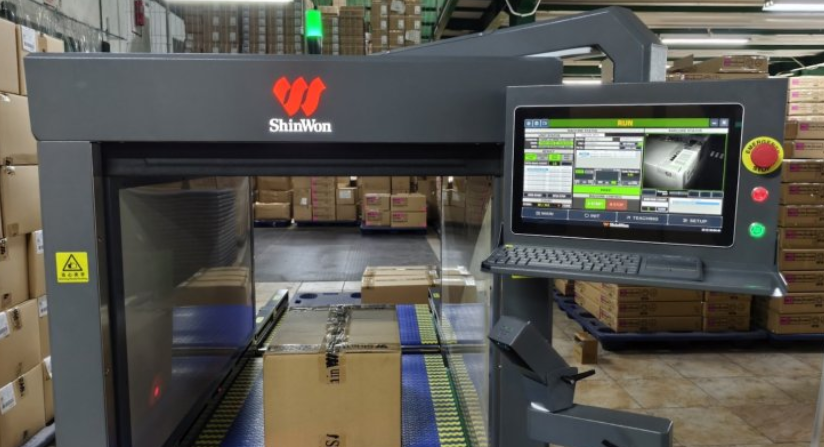
ShinWon will continue to deepen the application of RFID
As a company with half a century of experience in the industry, ShinWon has long faced the challenge of efficiency and accuracy in high-mix, low-volume production environments. The RFID tunnel system being promoted specifically addresses this challenge: when goods pass through narrow channels equipped with high-performance RFID readers, the system can automatically perform real-time product detection, verifying packaging information and tag data without manual intervention. This system seamlessly integrates with the Manufacturing Execution System (MES), significantly reducing manual labor intensity through artificial intelligence technology, mitigating the risk of tag errors at the source, and injecting intelligent momentum into the production process.
In a pilot application at the PT. Fashion Stitch Joshua factory in Indonesia, the system has demonstrated significant value: detection efficiency has increased by approximately 32%, the factory can efficiently process 1740 boxes of goods (approximately 30,000 garments) per day, and the peak processing capacity reaches 2500 boxes/day when multiple production lines are simultaneously detecting. Through technological optimization, the detection channel length has been shortened from 5 meters to 3.2 meters, increasing factory space utilization by over 30%, and enabling the expansion of the number of production lines within the original footprint, creating physical space conditions for increased production capacity.
ShinWon plans to build a highly integrated end-to-end traceability system by the first quarter of next year, with system installations at its global subsidiaries completed. This system will enable real-time dynamic tracking from packaging to shipment. This will further improve packaging accuracy, strengthen international buyer trust, and help the company achieve its “zero complaints” quality goal—providing more reliable supply chain assurance for global partners through enhanced quality control and data-driven process management.
Driven by both digitalization and sustainable development, ShinWon’s technological strategy extends beyond this. Currently, the company is piloting an end-to-end traceability project, integrating RFID and UPC coding technologies to achieve full-chain traceability from raw cotton procurement to final product delivery and global distribution. In the future, the company will also focus on developing AI-powered predictive manufacturing management tools and implementing sustainable logistics optimization solutions to continuously deepen its intelligent manufacturing transformation.
Meanwhile, ShinWon is making strides in technological innovation: building a blockchain-based traceability platform to strengthen supplier ethical compliance management; and actively applying emerging technologies such as generative AI design, AI-driven virtual showrooms, immersive virtual reality experiences, and machine learning trend prediction to comprehensively empower core aspects such as product development, marketing presentation, and market forecasting.
“The global rollout of the RFID tunneling system is a significant milestone in driving the digital transformation of the fashion manufacturing industry,” said Peter Lee, head of ShinWon’s Smart Engineering team. He added that increased supply chain transparency will further solidify industry partnerships and inject new momentum into the sustainable development of the fashion industry.
Why are more and more fashion giants adopting RFID comprehensively?
RFID, with its contactless, batch reading, and traceability features, can accurately address pain points in multiple aspects of the fashion industry, including inventory, supply chain, and consumer experience. It also aligns with the industry’s trends towards digitalization and sustainable development. Therefore, more and more fashion giants are adopting this technology comprehensively. The specific reasons are as follows:
Inventory Management Innovation: RFID, through contactless batch reading technology, reduces the time for single-store inventory checks for fashion brands from several days to several hours. Inventory accuracy has increased from around 60% to over 98%. This reduces stockouts and the capital tied up in inventory, and reusable tags can integrate anti-theft functions, reducing theft rates and material costs. It also adapts to the high-frequency turnover needs of fast fashion, aligning with the trend of green operations.
Transparent Supply Chain Management: Embedding RFID tags from the raw material stage enables real-time tracking of fabric usage, production progress, and logistics trajectory. Combined with GPS, it achieves precise cross-regional goods positioning, shortening production cycles by over 20% and improving logistics and warehousing efficiency by 90%. It also allows for rapid traceability of quality issues, reducing recall costs and brand reputation risks, and solving the coordination challenges of cross-regional stock transfers and replenishment.
Enhanced Consumer Experience: In physical stores, RFID supports rapid batch checkout (reducing checkout time from minutes to seconds) and smart fitting room outfit recommendations, improving shopping convenience and average order value. Online, accurate inventory data supports omnichannel services such as in-store pickup and curbside pickup, avoiding stockout disputes after ordering. Furthermore, NFC and QR codes allow consumers to access traceability and washing information, strengthening brand interaction and trust.
Sustainable Development Empowerment: The combination of RFID and blockchain enables product authenticity verification and tamper-proof traceability, meeting consumer concerns about compliance and carbon footprint, and effectively combating counterfeit goods. Washable RFID tags can withstand more than 50 washes, providing technical support for clothing rental and secondhand transactions, improving the utilization rate of raw fibers, aligning with the circular economy development requirements of the fashion industry, and strengthening the brand’s social responsibility image.
Digital Transformation and Business Decision Support: Product circulation data collected by RFID is analyzed by AI algorithms to accurately predict consumer trends and popular styles, optimizing production plans to reduce blind production and shortening the new product launch cycle by more than 50%. Unified data standards enable global store and warehouse information sharing, providing technical support for the brand’s global expansion and consolidating market leadership through data-driven approaches.