
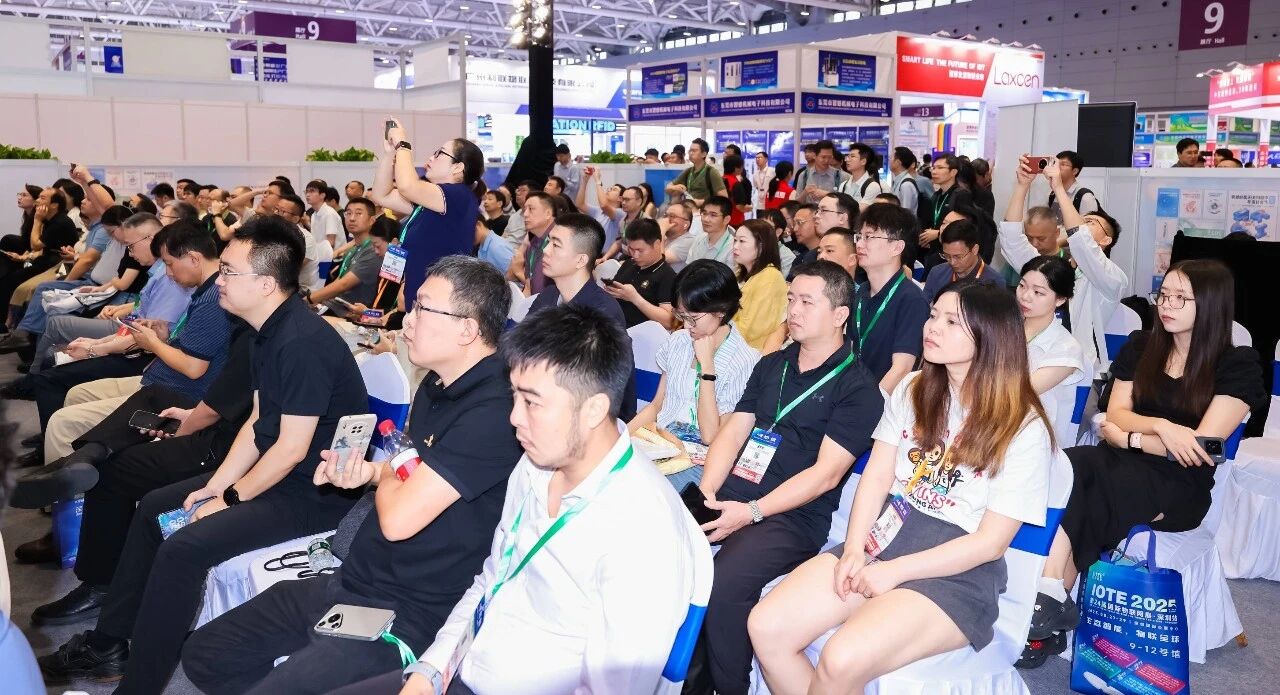
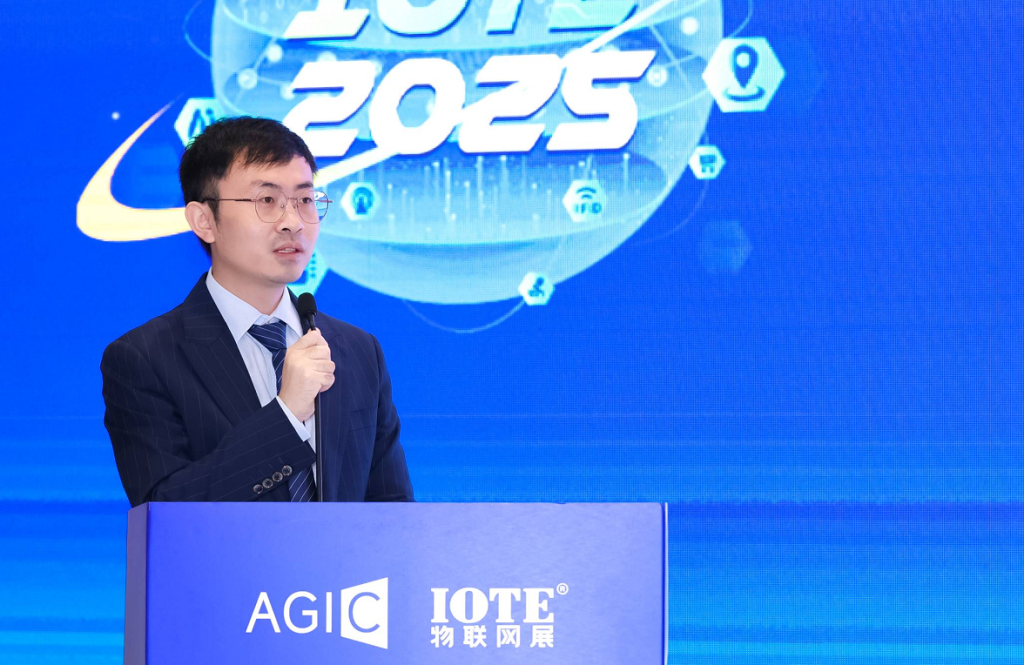
On August 28, 2025, the IOTE 2025 Shenzhen RFID Passive IoT Ecosystem Seminar was held as scheduled. At the start of the meeting, the host welcomed friends from across the country and briefly introduced the conference and its attendees. He then officially opened the meeting.
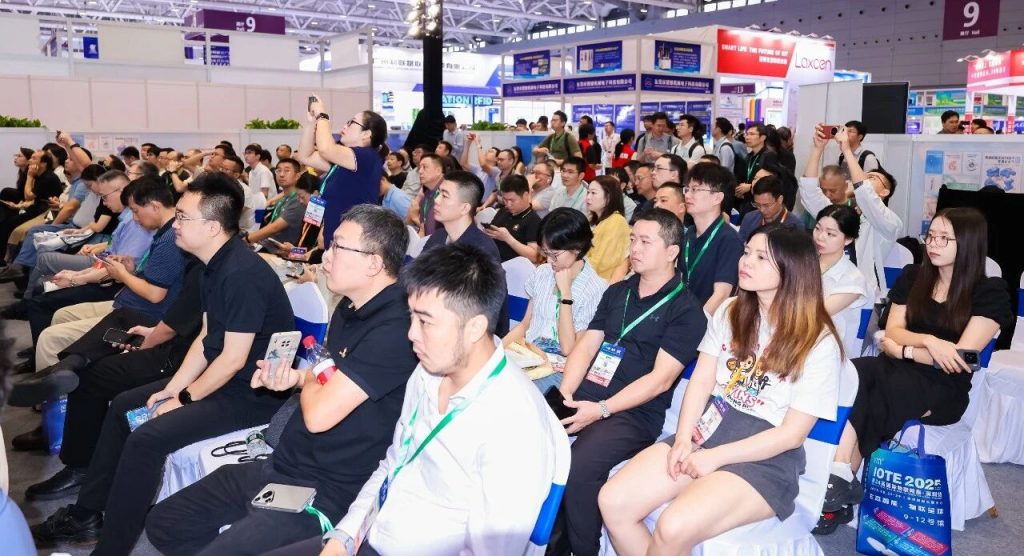
The first speaker was Jia Jiahao, a technical support expert at Pingtou Ge (Shanghai) Semiconductor Technology Co., Ltd. He stated that demand for RFID technology continues to grow in key sectors such as fast-moving consumer goods (FMCG) retail, apparel and footwear, and logistics and parcel delivery. He also pointed out that large-scale RFID deployment in the FMCG and retail industries faces challenges such as degraded RFID tag radio frequency performance in complex media environments, missed reads and cross-reading in metal and liquid environments, and insufficient chip and tag technology penetration. Pingtou Ge’s Yuzhen 611 series RFID electronic tag chips offer advantages such as high sensitivity, high reliability, excellent consistency, good stability, and low overall cost. Combined with innovative solutions (optimized antenna design, enhanced reader performance and algorithms, and improved equipment scheduling efficiency), they achieve high recognition rates and high yields in multiple fields. He also demonstrated the application results of this chip in the food industry and catering supply chain, including improvements to item recognition accuracy in complex retail scenarios reaching 99.8%, real-time visibility into logistics status, and improved inventory efficiency. Finally, he mentioned that Yuzhen 611 will continue to expand its market scale and expand its application scenarios, and announced the upcoming release of a new generation of universal RFID tag chips.
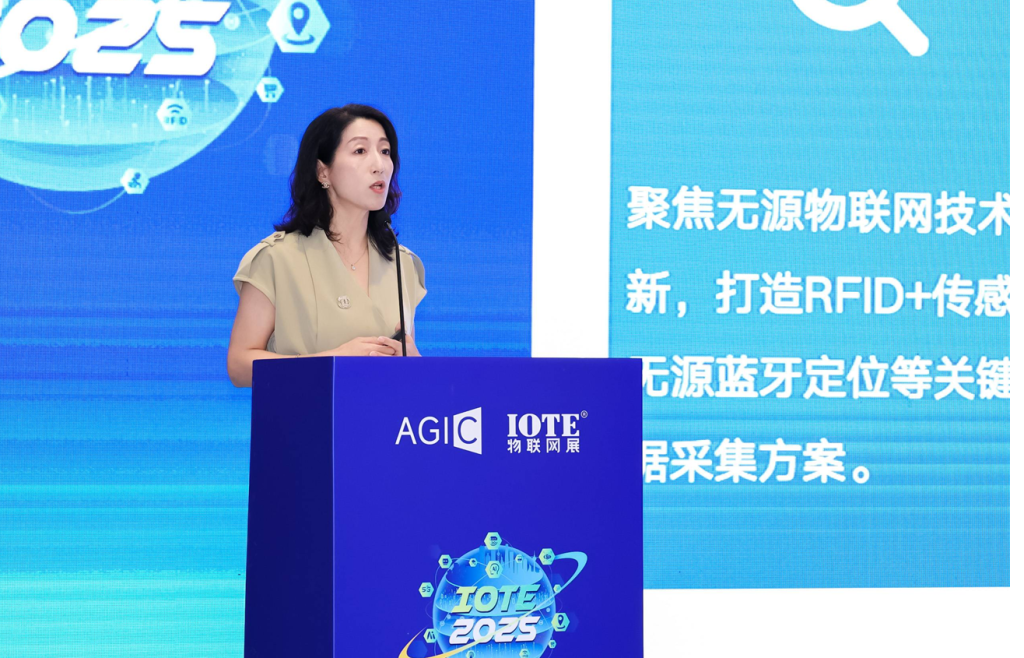
The second speaker was Yang Linli, Deputy General Manager of Shanghai Kunray Electronics Technology Co., Ltd. She stated that, against the backdrop of the accelerated evolution of general-purpose large-scale models, the industrial sector is driving the deep integration of AI and physical manufacturing. The 2025 “Artificial Intelligence + Manufacturing” initiative explicitly supports the application of large-scale models in key scenarios, with the gradual development of smart factories and the simultaneous advancement of digital transformation. However, industrial intelligence requires the acquisition of continuous and accurate physical data, which currently faces numerous challenges. Kunray Electronics is focusing on innovation in passive IoT technology, integrating RFID, Bluetooth, and 5G-A technologies. This approach promises to enable low-cost, large-scale collection of critical data, facilitating industrial intelligent upgrades and full-lifecycle asset management. This solution will effectively overcome the bottlenecks of traditional sensor wiring, such as complex, high-cost, and difficult maintenance, providing a low-cost, scalable data engine for industrial large-scale models and facilitating the implementation of intelligent manufacturing.
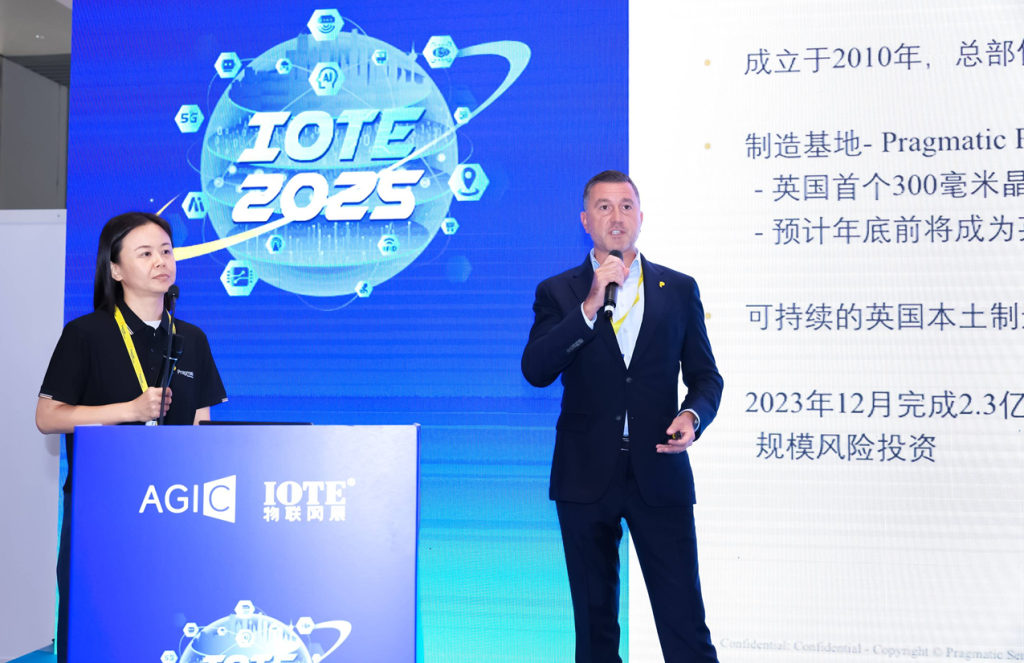
Next up was James Davey, Senior Vice President of Sales, Business Development, and Product Management at Pragmatic Semiconductor. He explained that ubiquitous connectivity promises unprecedented insights and efficiency, but its implementation is challenged by high costs, limited availability, and sustainability challenges. Pragmatic’s flexible FlexICs sustainably bridge the physical and digital worlds, enabling low-energy, low-cost edge and item-level intelligence at scale across industries such as healthcare, logistics, consumer packaged goods, and electronics. He also introduced the Pragmatic NFC Connect, a product within the FlexIC product family that redefines the parameters for near-field communication (NFC) connectivity, providing seamless intelligent solutions for mass-market products and unlocking the potential of a truly connected world.
RAMXEED LIMITED’s Asia Marketing Director, Luo Jian, shared how to address the bottlenecks of traditional RFID, such as slow write speeds, short lifespans, and high power consumption. RAMXEED utilizes a passive RFID solution with built-in FeRAM, achieving write speeds hundreds to thousands of times faster, a write cycle endurance of up to 1 trillion times, and exceptional energy efficiency, while also enabling battery-free operation. This offers significant advantages in scenarios such as smart manufacturing, medical traceability, and wireless sensing. In the AI era, FeRAM RFID enables real-time, high-frequency data collection and storage in edge devices, injecting new momentum into intelligent IoT architectures.
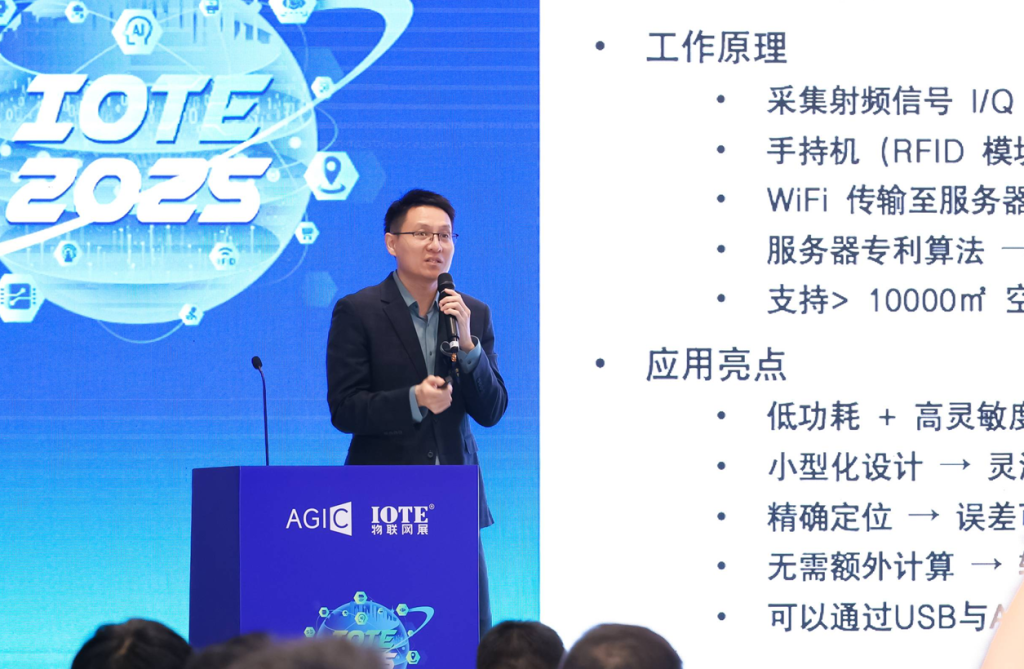
Gan Quan, Director and Deputy General Manager of Shenzhen Sincere Technology Co., Ltd., shared Sincere’s Re-PIoT technology. This technology, derived from the reverse evolution of the EP-IoT technology jointly developed with Huawei, represents a revolutionary advancement in passive IoT inventory and positioning. Its positioning accuracy is outstanding, with horizontal errors typically less than 1.5 meters and vertical accuracy reaching 0.5 meters (capable of pinpointing the number of cabinet layers), breaking through the limitations of traditional positioning. The core Helper device consumes only 1/1000th the power of traditional readers and costs 1/10th the cost, boasts 100 times higher sensitivity, and boasts a battery life of over three years. In practical applications, it can enable contactless inventory in smart stores. In smart warehouses, when combined with robots, inventory and positioning efficiency reaches 300 times that of a traditional five-person team. Future applications are expected to expand into more scenarios through the integration of robots, video, and other technologies, revolutionizing RFID positioning standards. Cao Jie, R&D Director of Shenzhen Xinquan Semiconductor Materials Co., Ltd., noted that anisotropic conductive adhesive, a key micro-interconnect material, is increasingly playing a vital role in RFID packaging processes due to its unique properties of Z-axis conductivity and in-plane insulation. Xinquan Semiconductor boasts strong packaging material R&D capabilities and has developed a variety of ACP products through forward design. These products feature high glass transition temperatures (Tg), excellent chip encapsulation, and millisecond-level curing speeds to meet customers’ technical requirements for RFID inlays with varying chips, substrates, bonding equipment, and curing temperatures. Xinquan Semiconductor will continue to provide RFID customers with other cost-effective key materials and looks forward to expanding the application of ACP materials into other fields.
Cao Jie, R&D Director of Shenzhen Xinquan Semiconductor Materials Co., Ltd., noted that anisotropic conductive adhesive, a key micro-interconnect material, is increasingly playing a vital role in RFID packaging processes due to its unique properties of Z-axis conductivity and in-plane insulation. Xinquan Semiconductor boasts strong packaging material R&D capabilities and has developed a variety of ACP products through forward engineering. These products feature high glass transition temperatures (Tg), excellent chip encapsulation, and millisecond-level fast curing to meet the technical requirements of customers for RFID inlays with different chips, substrates, bonding equipment, and curing temperatures. Xinquan Semiconductor will continue to provide RFID customers with other cost-effective key materials and looks forward to expanding the application of ACP materials into other fields.
This concludes the morning session. We will report on the afternoon session at a later date. Stay tuned.